You’ve started researching Tanzania and East Africa, and now you’re staring at safari prices ranging from $200 a day to $2,000 a day, wondering which number actually applies to your trip. The cost of a African safari depends on far more than most quotes let on, and without a clear breakdown, it’s easy to either overpay for a mediocre trip or underbudget and get stuck with a disappointing one.
So how much does a safari cost in Tanzania? For a realistic mid-range trip in Tanzania, budget between $300 and $600 per person per day, with luxury safaris climbing past $1,000 daily and budget safari options dropping closer to $150 to $250. The exact figure shifts based on which parks you visit, when you travel, and whether you’re chasing the Great Migration or keeping things simple.
In this guide, we break down real costs by travel style, from budget to luxury, and by season, park fees, and add-ons like Kilimanjaro treks or a Zanzibar beach extension. As a Tanzania-based operator planning these trips daily, we’ll show you exactly where your money goes and where you can save without cutting corners on safety or experience.
Why safari costs vary so much across Africa
Ask five safari operators for a quote and you’ll get five different numbers, sometimes for the exact same itinerary. That’s not a pricing trick. The cost of a African safari swings widely because so many separate cost drivers stack on top of each other: which country you visit, which park, what month you travel, how you sleep at night, and how many people share the vehicle. Understanding these drivers is the difference between comparing quotes intelligently and just picking whichever number looks smallest on a screen.
Country and region matter more than most travelers expect
Botswana and Rwanda sit at the premium end of the continent, often running $700 to $1,500 per person per day because both countries deliberately cap visitor numbers to protect fragile ecosystems. Tanzania and Kenya offer a wider spread, since both have budget camping circuits and five-star lodges operating in the same national parks. South Africa tends to be the most affordable entry point into Big Five viewing, thanks to self-drive options in parks like Kruger.
| Country | Typical daily cost (per person) | Why |
|---|---|---|
| Tanzania | $150 to $1,000+ | Wide range of camps, from budget to ultra-luxury |
| Kenya | $150 to $900 | Similar spread, plus mobile migration camps |
| Botswana | $700 to $1,500 | Low-volume, high-cost conservation model |
| Rwanda | $1,500+ (gorilla permits alone) | Permit scarcity drives price |
| South Africa | $100 to $600 | Self-drive and reserve variety |
The country you choose sets your price floor before you’ve picked a single lodge or itinerary day.
Park and conservation fees add up fast
Every national park in Tanzania charges its own entry fee, and these aren’t small line items. Serengeti National Park runs around $70 per adult per 24-hour period, Ngorongoro Crater adds a conservation fee on top of its own entry cost, and Kilimanjaro National Park charges separately again if you’re combining a climb with your safari. These government-set fees apply regardless of which operator you book with, so they’re one of the few costs that don’t vary between quotes, only the number of parks you visit does.
Season shifts prices by 30 to 50 percent
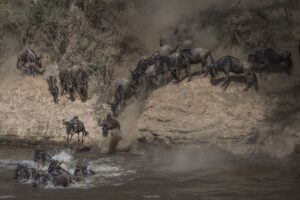
June through October is peak dry season across northern Tanzania, when wildlife concentrates around permanent water sources and the Great Migration safaris crossing the Mara River draw crowds to Serengeti’s northern sector. Camps and lodges know demand outstrips supply during these months, so rates climb accordingly. Booking the same room in April or November, during the short or long rains, can save you 30 to 50 percent, and wildlife viewing stays genuinely good since animals don’t disappear, they just spread out differently. If your dates are flexible, season is the single biggest lever you can pull on cost, so it pays to know the best time to visit Tanzania before you lock in dates.
Accommodation style drives the biggest swing of all
Sleeping arrangements separate a $150 day from a $1,000 day more than almost any other factor. A public campsite with shared bathrooms costs a fraction of a private tented camp with a plunge pool and a dedicated butler, even though both sit inside the same park boundary. Mid-range lodges with en-suite rooms and solid meals fall comfortably in between, and this is where most travelers researching cost of safari in africa end up landing once they see what budget camping actually involves.
Group size and vehicle exclusivity change your per-person math
A private safari in Tanzania for two people splits the vehicle, guide, and fuel costs between just those two travelers, while a group safari with six passengers spreads the same fixed costs across more people, lowering everyone’s per-person rate. That’s why solo travelers and couples often see higher daily quotes than families or small groups booking the identical route. If you’re traveling as a pair and want to control cost, ask your operator whether joining a scheduled group departure is an option instead of booking a fully private vehicle.
Guide quality and vehicle condition aren’t optional extras
A newer 4×4 with a pop-up roof, a mechanic on call, and a guide with fifteen years of bush experience costs more to operate than an aging vehicle and a driver still learning animal behavior. This isn’t a place to shop purely on price. A breakdown in the middle of Serengeti with no backup plan turns a dream trip into a lost day, so factor guide expertise and fleet quality into your comparison, not just the bottom-line number on a quote.
How to budget for your African safari
Budgeting for a safari works best when you flip the usual approach. Instead of asking "how much would an african safari cost" and hoping a single number appears, start by deciding what you actually need from the trip, then let the price follow. A traveler who must see the Mara River crossing has a different budget than one who’s happy with general game viewing in the dry season shoulder months, and how many days you spend on safari shifts the total just as much. Get clear on your non-negotiable priorities before you request quotes, and you’ll stop comparing apples to oranges when three operators send back wildly different numbers for what looks like the same itinerary.
Decide what matters most before you comfy compare quotes
Rank your priorities honestly: is it the Great Migration timing, a specific park like Ngorongoro Crater, private versus shared vehicles, or simply keeping the total trip budget under a fixed ceiling? Write these down before contacting operators. This single step prevents the common trap of falling in love with a luxury camp’s photos, then feeling disappointed when the budget version can’t match it. Your priorities become the filter every quote gets run through.
Decide what you’re not willing to compromise on before you look at a single price.
Break your budget into daily and one-time costs
Most of your daily safari cost covers accommodation, park fees, guide, vehicle, fuel, and meals bundled together. But several costs only hit once, and travelers often forget them until checkout. Build your estimate using both categories:
- International flights to Kilimanjaro or Arusha (often $900 to $1,800 round trip from the US)
- Tanzania visa fee (around $50 to $100 depending on nationality)
- Travel insurance with medical evacuation coverage
- Tips for guides and camp staff (budget $15 to $25 per person per day)
- Pre-safari hotel night in Arusha before an early park departure
- Optional gear like binoculars or a good camera lens
Listing these separately keeps your daily rate comparisons honest, since a quote that looks cheaper per day sometimes hides higher one-time fees elsewhere.
Account for costs that never show up in a daily rate
Operators quote what’s easiest to standardize, which means flights, visas, and insurance almost never appear in the headline number. Plan for these separately rather than assuming they’re baked in, because a $300-a-day safari that ignores a $1,400 flight isn’t actually the deal it first appears to be. Reach out and ask directly what’s excluded if a quote doesn’t spell it out; a reputable operator will answer without hesitation.
Use a simple formula to sanity-check any quote
When you’re staring at a proposal, run this rough math to see if the number holds up:
(Park fees + accommodation + guide/vehicle + meals) x nights
+ flights + visa + insurance + tips
= total realistic budget
This quick check catches quotes that look attractive on the surface but quietly skip park fees or assume you’ll cover your own transfers. Working through this formula once gives you a baseline you can apply to every operator you talk to afterward.
Average Tanzania safari costs by travel style
Tanzania breaks down into three clear pricing tiers, and knowing which one you’re shopping in saves you hours of confusing back-and-forth with operators. Every tier can get you into Serengeti National Park and Ngorongoro Crater, so the difference isn’t which animals you see, it’s how you sleep, eat, and move between parks each day. Looking at real numbers side by side makes the cost of a safari in Africa much easier to plan around than a single average figure ever could.
| Travel style | Daily cost (per person) | Typical accommodation | Vehicle setup |
|---|---|---|---|
| Budget | $150 to $250 | Public campsites, basic guesthouses | Shared 4×4, group departures |
| Mid-range | $300 to $600 | En-suite lodges, permanent tented camps | Private or small-group 4×4 with pop-up roof |
| Luxury | $700 to $2,000+ | Private tented suites, plunge pools, butler service | Fully private vehicle, sometimes with fly-in transfers |
Budget safaris start around $150 a day
Options at this level put you in public campsites with shared bathroom blocks, and meals are simple but filling, usually prepared by your guide over a campfire. Group departures are common on these budget safari trips, since splitting the vehicle and guide fee across six or eight travelers is what keeps the number this low. Wildlife viewing doesn’t suffer, since you’re driving the same roads through the same parks as everyone else, but comfort at the end of the day is basic.
Mid-range safaris deliver the best balance
Somewhere between $300 and $600 a day, mid-range trips add en-suite rooms, hot showers, and proper sit-down meals without tipping into five-star territory. Most of our clients booking mid-range Tanzania safaris through La Zanna Tours & Safaris land here, because it lets you fund a longer trip or add a Zanzibar extension without the daily rate of a luxury camp. Comfort improves noticeably at this level, and it’s where the value curve genuinely flattens out.
Mid-range Tanzania safaris give you the best comfort-per-dollar of any tier.
Luxury safaris cost $700 to $2,000+ a day
Private tented suites with plunge pools, dedicated butlers, and sundowners set up in the bush push the daily rate well past $700, and the most exclusive camps during peak migration season can clear $2,000. Fly-in transfers between parks replace long drives, which matters if your trip is short and you want to maximize game-viewing hours over travel time. Guests booking luxury safari tours in Tanzania through us typically choose this tier for honeymoons, anniversaries, or once-in-a-lifetime family trips where time matters more than the extra spend.
Great Migration timing adds a premium regardless of style
Chasing the Mara River crossing migration safari between July and September pushes every tier upward, since camps in the northern Serengeti sector raise rates when demand peaks. A budget traveler might see $250 become $300, while a luxury traveler could see $1,200 become $1,800 for the same room during migration month. If timing the crossing matters more than saving money, build that premium into your plan from the start rather than discovering it mid-quote.
What’s included and excluded in safari packages
Quotes from two operators can differ by hundreds of dollars a day, and often the gap comes down to what’s actually bundled into the price rather than the quality of the trip itself. Reading the fine print matters more than comparing headline numbers, because a safari package that looks cheaper on paper sometimes excludes park fees, drinks, or transfers that another quote already folds in. Knowing exactly what should be included lets you spot a lowball quote before you’ve wired a deposit.
What a typical safari package includes
Most mid-range and luxury Tanzania itineraries bundle the core costs of running your trip day to day, so you’re not nickel-and-dimed once you’re in the bush. A standard all-inclusive safari through La Zanna Tours & Safaris covers:
- Accommodation for every night of the itinerary
- All meals during the safari portion (breakfast, lunch, dinner)
- Park entry fees and conservation area fees
- A private guide and 4×4 vehicle with pop-up roof
- Fuel and vehicle maintenance for the full route
- Airport transfers to and from Kilimanjaro International Airport
- Bottled water in the vehicle each day
A well-built quote should never make you guess whether park fees are already paid.
What’s usually excluded, even in good-value quotes
Several costs sit outside the daily rate on almost every reputable itinerary, and that’s normal rather than a red flag. Excluded items typically include international and domestic flights, Tanzania visa fees, travel insurance, alcoholic drinks and premium sodas at camps, tips for guides and camp staff, and personal expenses like souvenirs or laundry. Some luxury camps also charge separately for spa treatments, hot air balloon rides over the Serengeti, or a private sundowner setup, so ask specifically about these if they’re on your wish list.
| Category | Usually included | Usually excluded |
|---|---|---|
| Accommodation | Yes | – |
| Meals during safari | Yes | Alcohol, premium drinks |
| Park and conservation fees | Yes | – |
| Guide and vehicle | Yes | – |
| Airport transfers | Yes | – |
| International flights | – | Yes |
| Visa and insurance | – | Yes |
| Tips | – | Yes |
| Optional activities (balloon rides, spa) | – | Yes |
Ask these questions before you book
Comparing two quotes side by side only works once you know both operators are quoting the same scope. Before confirming any African safari trip cost, ask directly whether park fees, all meals, and airport transfers are included, whether the vehicle is private or shared, and whether the price assumes peak or low season rates. A trustworthy operator answers these questions in one email without hedging, and knowing what to expect on a safari in Tanzania tells you whether the scope they quote actually matches the trip you’ll live.
Transparency here isn’t a courtesy, it’s the whole point of getting a quote in the first place. If an operator can’t clearly state what’s covered, treat that as a warning sign rather than a formality to skip past on your way to booking.
Adding Kilimanjaro trekking or a Zanzibar extension
Many travelers researching the cost for African safari trips end up planning a three-part journey: wildlife viewing, a Kilimanjaro climb, and a few days on the beach in Zanzibar. Each piece has its own pricing logic, and stacking them together changes your total budget more than most people expect going in. Knowing the rough numbers before you start planning keeps your itinerary realistic instead of getting attached to a combination you can’t actually afford.
Kilimanjaro trekking costs run separately from safari days
Climbing Kilimanjaro isn’t priced the same way as game drives, since you’re paying for park fees, mountain crew wages, camping equipment, and a multi-day route rather than a vehicle and guide. Budget climbs on routes like Marangu start around $2,000 to $2,500 per person for a 5-day trek, while longer, higher-success routes like Lemosho or the 7-day Machame route trek typically run $2,500 to $3,500 for 7 to 8 days. Premium operators offering private crews, better food, and extra acclimatization days can push past $4,000. Longer routes cost more upfront, but they also raise your summit success rate significantly, since extra days give your body more time to adjust to altitude.
Paying more for an extra acclimatization day on Kilimanjaro is usually money better spent than paying less for a shorter route you might not finish.
Zanzibar extensions add comfort without breaking the budget
A Zanzibar beach extension is one of the more affordable add-ons to any African safari cost estimate, since beach accommodation runs cheaper per night than most safari lodges. Budget guesthouses near Nungwi or Paje start around $50 to $80 per night, mid-range beach resorts fall between $150 and $300 a night, and high-end beachfront villas or all-inclusive resorts can reach $400 to $700 a night. Most travelers add 3 to 5 nights to their Zanzibar beach holiday, which is enough time to decompress after early morning game drives or a demanding mountain climb.
Combining all three pushes your total trip cost higher, but spreads nicely
Here’s a rough example for a two-week trip combining a 6-day mid-range safari, a 7-day Kilimanjaro climb, and 4 nights in Zanzibar:
| Component | Estimated cost per person |
|---|---|
| 6-day mid-range safari | $2,400 to $3,600 |
| 7-day Kilimanjaro climb (Machame) | $2,500 to $3,500 |
| 4 nights mid-range Zanzibar | $600 to $1,200 |
| Total (excluding flights) | $5,500 to $8,300 |
Seeing the breakdown this way makes the full African safari trip cost far less abstract than a single combined quote would. Booking all three through one operator, rather than juggling separate bookings, also tends to simplify transfers between the mountain, the parks, and the airport.
Sequencing matters as much as pricing
Most travelers climb Kilimanjaro first, then safari, then finish on Zanzibar’s beaches, since your body needs recovery time after summit day and a few days of game drives before beach relaxation feels earned rather than rushed. If you’re building a custom itinerary, our team at La Zanna Tours & Safaris can sequence all three legs so transfers, rest days, and park entries line up without wasted travel time.
How to get the best value for your safari budget
Getting real value doesn’t mean chasing the cheapest quote you can find. It means spending your money where it actually improves the trip and skipping the costs that only pad someone’s margin. Travelers who ask how much does an african safari cost and then simply pick the lowest number often end up disappointed, while those who target specific value levers usually walk away with a better trip for less money. The strategies below are the ones we actually recommend to clients planning their African safari trips cost around a fixed budget.
Travel in the shoulder season
April, May, and November sit just outside peak dry season, and rates drop 30 to 50 percent compared to July through October. Wildlife doesn’t vanish during these months, it just spreads differently across the parks, and shorter rains rarely disrupt a well-planned itinerary. Shifting your travel dates by even a few weeks can free up budget for an extra night in Zanzibar or an upgrade from budget to mid-range accommodation.
Choose mid-range over luxury for most of the trip
Beyond a certain point, luxury spending buys you a plunge pool and a butler rather than better wildlife viewing. Mid-range camps put you in the same vehicles, on the same roads, watching the same animals as guests paying three times as much. If you want a taste of luxury without the full daily rate, book one or two luxury nights at the start or end of the trip and stay mid-range for the rest.
Spend on the days that matter most to you, not evenly across every night of the trip.
Book directly with a local operator
Reselling agencies and large international booking platforms add a markup layer that rarely improves your actual experience on the ground. Working directly with a Tanzania-based team means your money goes toward guides, vehicles, and park fees rather than a foreign office’s overhead. It also means faster answers when you’re comparing quotes, since you’re talking to the people actually running the trip rather than a call center reading from a script.
Adjust group size and trip length
Joining a small-group departure instead of booking a fully private vehicle can cut your per-person daily rate meaningfully, especially for solo travelers and couples. Trimming a day or two off a longer itinerary, taking a short safari from Zanzibar, or combining two nearby parks into one base camp instead of two separate lodges also reduces transfer costs without cutting into game-drive time.
- Ask about scheduled group departures if you’re traveling as one or two people
- Base yourself in one camp near two parks instead of switching lodges every night
- Request a shoulder-season quote alongside your peak-season one for comparison
- Bundle Kilimanjaro, safari, and Zanzibar with one operator to reduce transfer costs
Ask specifically about what drives the price up
A good operator will tell you exactly which line items are pushing your quote higher, whether that’s a fly-in camp, a private vehicle upgrade, or peak-season rates. Once you can request a custom quote and see the breakdown, it’s much easier to trim the right corners rather than guessing which cuts will actually save meaningful money.
Putting your safari budget into perspective
A safari isn’t a single price tag, it’s a stack of decisions: country, season, accommodation style, and how many extras you bolt on. Once you know park fees are fixed and everything else is negotiable, a quote stops feeling like a mystery and starts looking like a set of choices you actually control. The cost of a African safari ranges from $150 budget camping days to $2,000 luxury nights, but most travelers land somewhere in that $300 to $600 mid-range sweet spot and never regret it.
Spending time on this breakdown now saves you from either overpaying for comfort you don’t need or underbudgeting for a trip that turns stressful halfway through. Numbers matter, but so does working with people who answer your questions honestly and build the itinerary around your actual priorities. Ready to see real figures for your dates? Browse our mid-range Tanzania safari packages and request a free custom quote from La Zanna Tours & Safaris to start planning the trip properly.